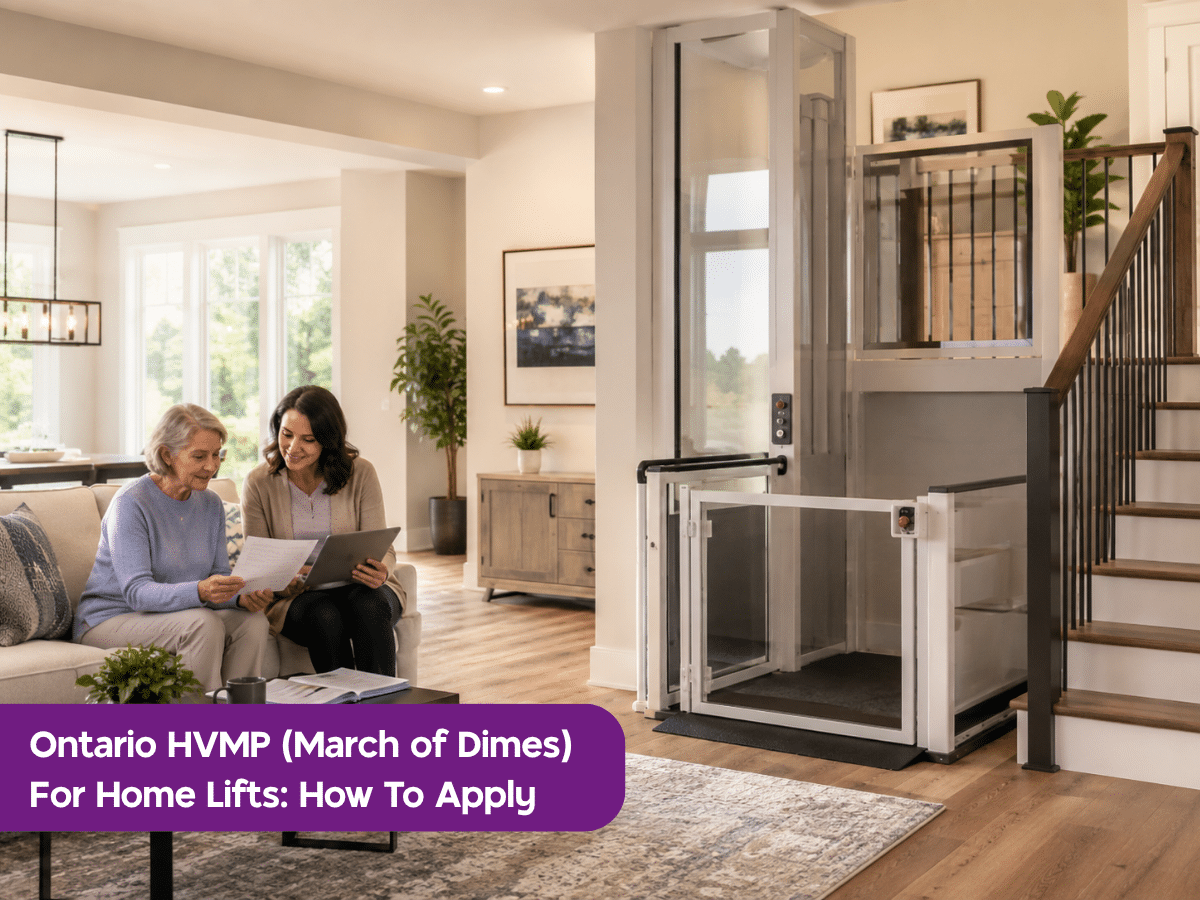




All throughout the Greater Toronto Area, more seniors are choosing to age in place and more individuals with mobility challenges are seeking to remain independent at home. As a result, home accessibility has become an increasingly important consideration for GTA homeowners. Making a home safer and easier to navigate can significantly improve quality of life and reduce the risk of falls. It also provides greater peace of mind for both individuals and their families.
However, accessibility renovations often involve considerable planning and financial investment. This leads many homeowners to ask the question “What are the biggest costs involved?” The answer depends on the home’s existing layout, the individual’s mobility needs and the scope of the modifications required. While some improvements are relatively affordable, others involve specialized equipment, structural renovations and professional assessments.
Specialized mobility equipment is often the largest expense.
Depending on an individual’s needs, necessary equipment may include stairlifts, porch lifts, home hospital beds or power lift chairs. Unlike traditional renovation materials, these products are purpose-built to provide safe, reliable assistance for individuals with reduced mobility and are designed to withstand years of daily use.
Journalist John Loeppky experienced these costs firsthand when installing a wheelchair lift in his Saskatchewan home. Writing for MoneySense, he explained that even after receiving grant funding, the project cost “more than $20,000.” He also described the often-overlooked administrative challenges involved in securing financial assistance before construction could even begin.
Sean MacGinnis, President of BuildAble, further explained that the increasing cost of durable medical equipment leaves homeowners with less available budget for the renovations themselves.
Structural renovations can quickly increase the budget.
Purchasing accessibility equipment is often only one component of a larger renovation project. Many homes throughout Toronto were built decades ago, long before accessibility standards became part of residential design. Narrow hallways, steep front entrances, multiple storeys and small bathrooms frequently require structural modifications before accessibility equipment can even be installed.
Common renovations include widening doorways, installing ramps, creating barrier-free entrances, relocating laundry rooms to the main floor, lowering kitchen counters, reinforcing floors or completely redesigning bathrooms. These improvements often require licensed contractors, electricians, plumbers, engineers and municipal building permits. As the complexity of the renovation increases, overall project costs grow too.
Accessible bathroom renovations represent a major investment.
Bathrooms remain one of the most dangerous areas in any home due to slippery surfaces and confined spaces. For this reason, bathroom modifications are among the most common accessibility projects undertaken by homeowners. An accessible bathroom may include easy-use fixtures, strategically placed grab bars, bath lift chairs, transfer benches, walk-in tubs, night lights, raised support toilet seats, widened doorways and shower chairs. These features significantly improve safety and independence.
As you can imagine, labour has become one of the fastest-growing expenses associated with accessibility renovations throughout Toronto. According to the MoneySense article, inflation, tariffs, rising lumber prices and labour shortages have all contributed to increasing renovation costs. These economic pressures affect accessibility projects even more because specialized equipment often consumes a significant portion of the available budget before any construction work begins.
Hiring contractors who have experience with accessible renovations can ultimately save money by ensuring modifications are completed correctly the first time. Poor workmanship or a lack of familiarity with accessibility standards can result in costly corrections later, particularly when grant funding or Occupational Therapist recommendations must be followed precisely.
Professional assessments are an important part of the process.
Another cost that homeowners sometimes overlook is the need for professional assessments before renovations begin. Many government funding programs require an evaluation by an Occupational Therapist (OT). He or she assesses an individual’s mobility challenges and recommends modifications that best support their daily activities.
Although these assessments add another step to the planning process, they often help homeowners avoid unnecessary renovations by focusing on the improvements that will provide the greatest long-term benefit. A comprehensive accessibility plan also allows renovations to be completed in phases, making larger projects more financially manageable over time.
Planning ahead can help reduce long-term costs.
One of the most valuable pieces of advice shared in the MoneySense article is the importance of planning for future needs rather than focusing solely on current mobility challenges. Sean MacGinnis recommends taking a phased approach whenever possible. For example, someone newly diagnosed with Multiple Sclerosis may only require grab bars today. However, he or she can begin planning and budgeting for a future accessible bathroom renovation before it becomes an urgent necessity.
Long-term planning allows homeowners to spread costs over several years while avoiding rushed decisions that may ultimately be more expensive. It also provides greater flexibility when applying for grants or coordinating multiple accessibility improvements within a single renovation project.
Financial assistance can help offset accessibility costs.
Although accessibility renovations can represent a significant investment, several financial assistance programs are available to eligible Ontario homeowners. According to RenoHouse, programs such as the Ontario Renovates Program may provide up to $25,000 toward eligible accessibility modifications. The March of Dimes Home & Vehicle Modification Program offers up to $15,000 in lifetime funding for qualifying home improvements. Homeowners may also be eligible for the federal Home Accessibility Tax Credit (HATC), which provides a non-refundable tax credit for eligible accessibility expenses.
Because funding availability, eligibility criteria and application requirements can change over time, homeowners should always confirm the latest program details with the administering organization before beginning any renovation project.
It’s wise to choose an experienced mobility solutions provider.
A knowledgeable company can recommend the most appropriate products, coordinate with Occupational Therapists, ensure proper installation and help homeowners prioritize renovations based on both their immediate and future needs.
At LifeCare Mobility Solutions, we’ve proudly served homeowners throughout Toronto, Scarborough, Markham, Richmond Hill, Thornhill, Pickering, Ajax, Whitby, Oshawa and communities across the GTA since 2010. As a locally owned and family-operated business, we work closely with Occupational Therapists and healthcare professionals to provide personalized mobility solutions that help individuals remain safe, comfortable and independent in their homes.
If you’re beginning your journey toward creating a more accessible home, our experienced team is here to answer your questions and recommend solutions that fit both your lifestyle and your budget.
Frequently Asked Questions (FAQs).
What accessibility renovation typically costs the most?
Projects involving home elevators, vertical platform lifts or extensive structural renovations are generally among the largest investments because they combine specialized equipment with significant construction work.
Are there grants available for accessibility renovations in Ontario?
Yes. Eligible homeowners may qualify for programs such as the Ontario Renovates Program, the March of Dimes Home & Vehicle Modification Program, and the federal Home Accessibility Tax Credit.
Do I need an Occupational Therapist assessment before renovating?
Many funding programs require an Occupational Therapist assessment to determine the most appropriate accessibility modifications and support grant applications.
Is it better to complete all accessibility renovations at once?
Not necessarily. Many accessibility professionals recommend developing a long-term plan and completing renovations in stages as needs evolve and budgets allow.
Can accessibility renovations increase my home’s value?
Some accessibility features may appeal to future buyers, but these renovations are primarily intended to improve safety, independence and quality of life rather than increase resale value.
Why should I work with an accessibility specialist?
Experienced accessibility providers understand product selection, installation requirements, applicable building standards and funding opportunities, helping homeowners avoid costly mistakes while ensuring their home meets their long-term mobility needs.
For information about any and all of the mobility solutions available from LifeCare Mobility Solutions, please don’t hesitate to call us at 416-267-9800 or email us at info@lifecaremobility.ca. You may also contact us by filling out the form on our Contact page!