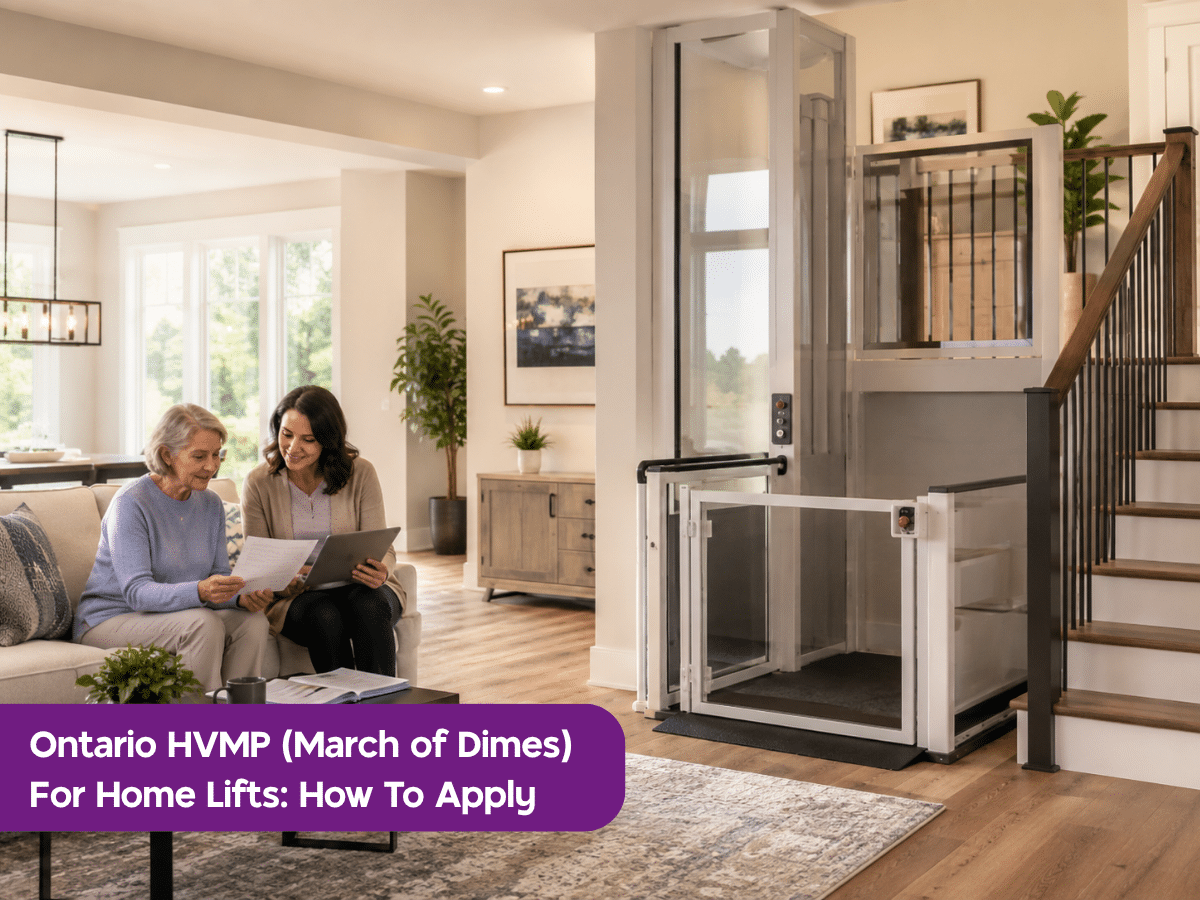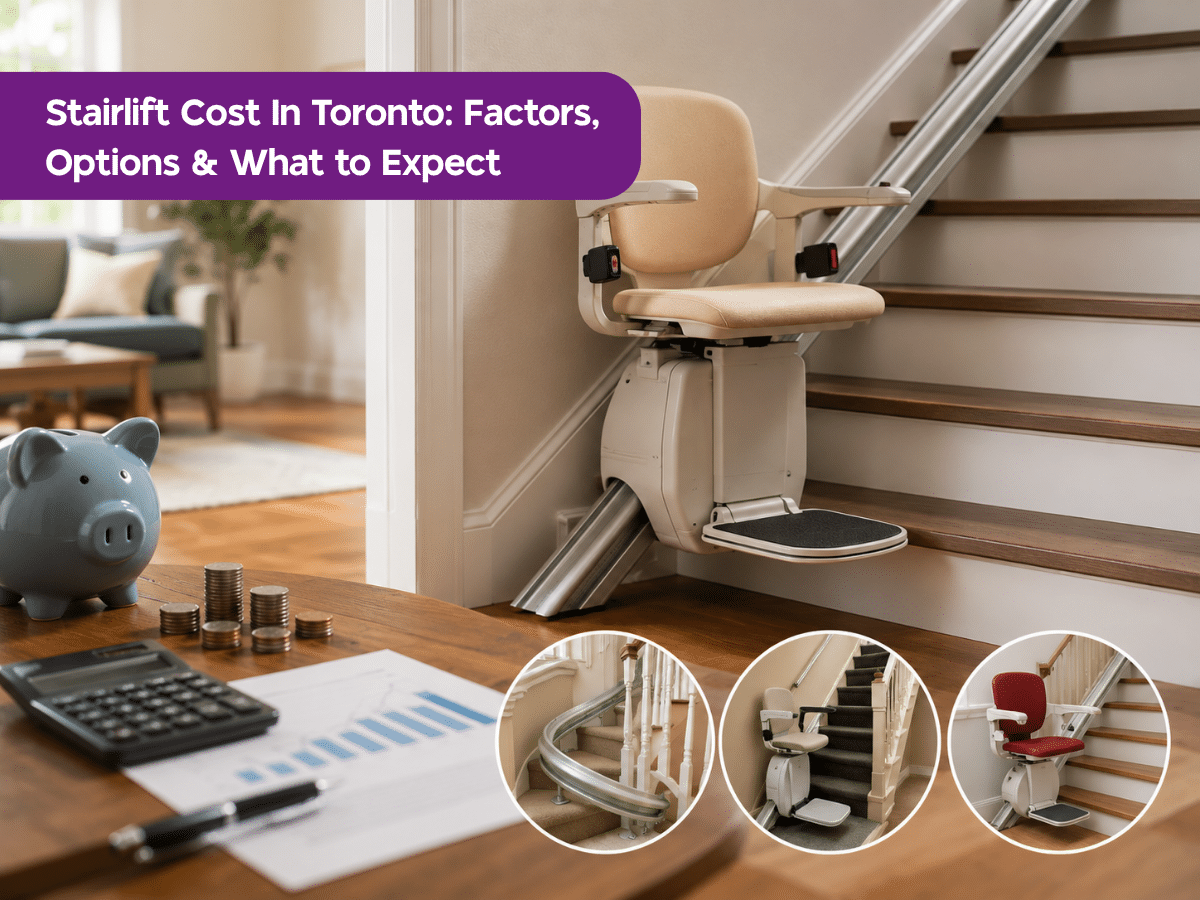




For many Ontario residents living with mobility challenges, navigating stairs or entering and exiting the home can become increasingly difficult. A stairlift, porch lift or other accessibility modification can restore independence and improve safety. However, these solutions often represent a significant financial investment.
Fortunately, Ontario’s Home and Vehicle Modification Program (HVMP), administered by March of Dimes Canada, may help eligible individuals offset the cost of essential accessibility equipment and home modifications.
What is the Home and Vehicle Modification Program?
The Home and Vehicle Modification Program (HVMP) is funded by the Ontario Ministry for Seniors and Accessibility and administered by March of Dimes Canada. The program is designed to help Ontarians with disabilities continue living safely and independently by reducing physical barriers within their homes and vehicles.
According to March of Dimes Canada, the HVMP provides funding for “basic and essential solutions directly addressing physical barriers within a home explicitly related to an applicant’s disability and current mobility restrictions as recommended by an Occupational Therapist.” This funding may be used toward a variety of accessibility solutions, including stairlifts, vertical platform lifts, modular ramps, ceiling track lifts, tub cut-outs and other approved home modifications.
Who is eligible for HVMP funding?
To qualify for HVMP funding, applicants must satisfy residency, disability and financial eligibility requirements. First, applicants must be permanent residents of Ontario. Temporary residents, international students, tourists and foreign workers holding temporary work permits are not eligible for the program.
Applicants must also have permanent, ongoing or recurring disabilities that significantly affect mobility and create substantial limitations in everyday activities. We’re talking about things like bathing, dressing, toileting, transferring, eating or moving safely throughout the home. The disability must also affect the person’s ability to enter or leave his or her residence in order to access medical care or community services.
Financial need is another important component of the application process. March of Dimes Canada evaluates household income based on after-tax earnings and household size to determine eligibility and any required financial contribution.
How do household size and income impact funding?
When determining eligibility, household size includes the applicant, his or her spouse or common-law partner and any other individuals aged 18 or older who reside in the home. If the applicant is under the age of 18, the household income calculation must include the income of parents, guardians and any other adults living in the residence.
For a single-adult household, the minimum after-tax income threshold is $38,000 and the maximum threshold is $54,000. For a two-adult household, the income range is $54,000 to $65,000. Households with three adults have a maximum income threshold of $71,000, while households with four or more adults also have a maximum threshold of $71,000.
Applicants whose household income falls at or below the minimum threshold may qualify for full funding without contributing financially toward the project. Those whose incomes exceed the maximum thresholds are not eligible for funding. Applicants whose incomes fall between the minimum and maximum thresholds may still qualify but will be required to contribute portions of the project cost.
How are financial contributions calculated?
If your household income falls between the minimum and maximum income limits, March of Dimes Canada will calculate a required contribution based on your residual family income. Residual income is determined by subtracting the allowable household income threshold from your actual household income.
The resulting amount is then used to determine the percentage of project costs you must contribute. For example, if a two-person household earns $60,000 after tax, the residual income would be $6,000 because the minimum threshold for a two-person household is $54,000. Since $6,000 falls within the $5,001 to $10,000 residual income range, the applicant would be responsible for contributing 20 percent of the total project cost.
For a stairlift project costing $12,000, this would result in a required contribution of $2,400. The remaining eligible amount could potentially be covered through the HVMP.
Why is an Occupational Therapist required?
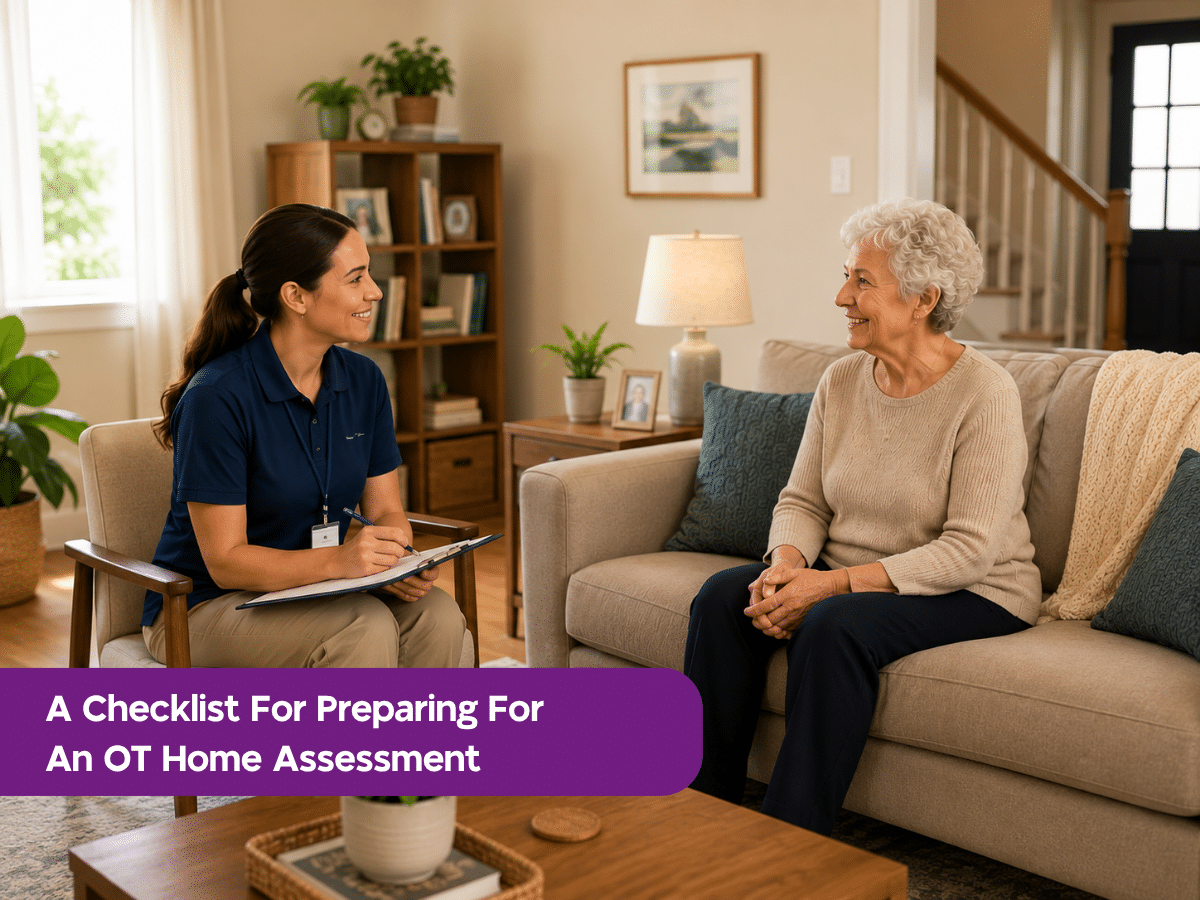
The HVMP requires professional documentation confirming that the requested equipment or home modification is necessary to address the applicant’s mobility challenges and support independent living. An Occupational Therapist will assess the individual’s functional limitations, evaluate the home environment and recommend appropriate accessibility solutions. His or her assessment helps ensure that funding is directed toward modifications that provide meaningful improvements in safety and accessibility.
Individuals seeking an Occupational Therapist can speak with their family physician, contact Ontario Health at Home by calling 416-310-2222 or visit the Ontario Society of Occupational Therapists website.
How can you apply for HVMP stairlift funding?
It is important to submit all required documentation. Incomplete applications will not be processed and only one follow-up attempt will be made to obtain missing information. The first step is to complete and sign the official HVMP application form. Applicants must then provide proof of income, including a Notice of Assessment from the most recent tax year.
Individuals applying for stairlifts, modular ramps, vertical platform lifts, tub cut-outs, ceiling track lifts or other qualifying home modifications must also provide Notices of Assessment for all homeowners listed on the property’s tax bill. Applicants must also provide disability verification through either an Occupational Therapist assessment or a completed Verification of Disability Form supplied by March of Dimes Canada.
A detailed quotation from a registered accessibility equipment supplier or contractor is another essential component of the application. The quote must clearly outline all costs associated with the project. Homeowners are required to submit current property tax bills, while renters must provide written approval from their landlords. Condominium owners must obtain approval from their condo boards prior to installation.
For custom curved stairlifts, modular ramps, vertical platform lifts and ceiling track lifts, additional documentation such as photographs, measurements and drawings must also be included. Straight stairlift applications do not require these additional materials.
Frequently Asked Questions (FAQs).
Does HVMP cover stairlifts?
Yes. Stairlifts are among the accessibility solutions that may qualify for funding when they are recommended by an Occupational Therapist and approved through the program.
How much funding can I receive through HVMP?
The program may provide up to $15,000 in lifetime funding for eligible home modifications and accessibility equipment.
Can renters apply for HVMP funding?
Yes. Renters may apply, but they must obtain written permission from their landlords before any approved modifications can proceed.
Do I need an Occupational Therapist assessment?
In most cases, yes. An Occupational Therapist assessment is often the preferred method of verifying the need for accessibility equipment or home modifications.
Can I purchase a stairlift before my application is approved?
No. The program does not reimburse expenses incurred before authorization has been granted.
How do I submit my application?
Applications can be submitted by mail, email or fax directly to March of Dimes Canada after all required documents have been gathered.
Who should I contact if I have questions about eligibility?
March of Dimes Canada can be reached at 1-877-369-4867 for assistance with eligibility requirements and application questions.
To learn all about the stairlifts and vertical platform lifts offered by LifeCare Mobility Solutions, call 416-267-9800 or email info@lifecaremobility.ca. You may also contact us by filling out the form on our Contact page!