





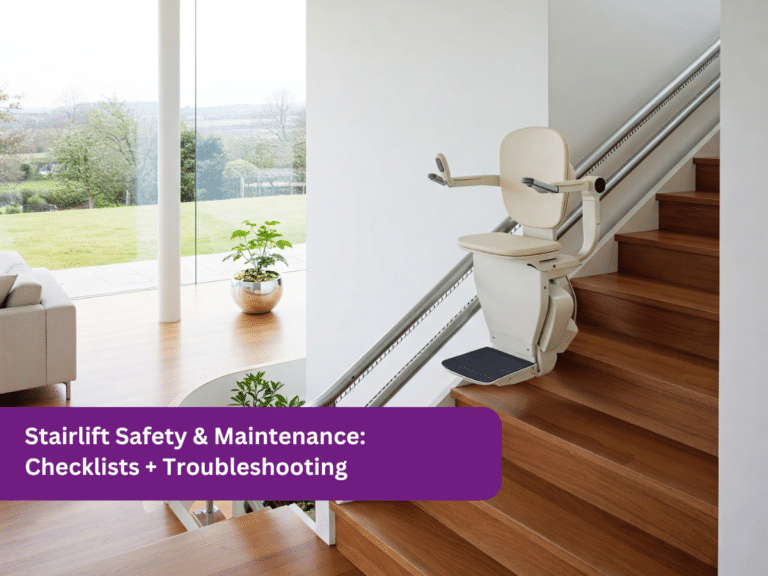
A stairlift is more than a convenience. For many seniors and individuals with mobility challenges, it is a vital piece of equipment that supports independence, comfort and safety at home. Like any mechanical system, a stairlift performs best when it is properly cared for. Consistent stairlift maintenance helps reduce the risk of breakdowns, keeps safety features working as intended and extends the life of the unit.
Stairlift safety and maintenance matter.
Stairlifts are designed with built-in safety features such as seatbelts, obstruction sensors and controlled start-and-stop motion. Over time, everyday use, dust accumulation and changes in indoor temperature can affect how these features perform. Regular maintenance ensures the stairlift continues to operate smoothly and safely.
Falls on stairs remain a significant concern for older adults in Canada. As Canada’s Health Infobase makes clear, “adults aged 65 years and older are at increased risk for falls…Falls among older adults can have serious health and social consequences. Falls are the leading cause of hospitalizations and death.”
This reinforces the importance of reliable home mobility equipment. A well-maintained stairlift reduces the risk of sudden stops, unexpected errors or uneven movement that could compromise safety.
Safety checks can be done as part of a daily, weekly or monthly routine.
Quick observations of your mobility solutions can help catch small issues before they become serious problems. On a daily basis, users or caregivers should confirm that the seatbelt fastens securely and retracts properly. The seat should lock firmly into place at both the top and bottom of the stairs. Call and send controls should respond immediately and the rail should remain free of clutter such as shoes, laundry baskets or pet toys.
Weekly checks can include a brief visual inspection of the rail to ensure there is no dust buildup or visible damage. Footrest safety sensors should be gently tested to confirm they stop the lift when an obstruction is detected. It is also important to ensure the stairlift parks correctly at its charging point. Improper charging can affect battery life. If the stairlift begins to behave unpredictably or displays warning signals, it is best to stop using it and arrange for it to be serviced.
Monthly stairlift maintenance focuses on cleanliness and performance monitoring. Dust and debris can interfere with smooth travel. Therefore, the rail should be wiped down using a dry or slightly damp cloth. Harsh cleaners and lubricants should be avoided unless specifically recommended by the manufacturer.
During monthly checks, the seat swivel mechanism should rotate smoothly and lock securely at the top landing. Armrest controls should respond without sticking. Any changes in speed or noise should be noted. Slower movement or incomplete trips can indicate battery wear, which is a common issue as stairlifts age.
Professional servicing plays a critical role in stairlift safety.
Most manufacturers recommend an annual inspection. However, some households may benefit from more frequent visits depending on usage. During a professional service appointment, technicians inspect and test safety sensors, evaluate battery health, check wiring and motor performance, and make necessary adjustments to alignment and ride quality. They also confirm that the stairlift remains securely mounted and operates within its rated weight capacity.
Even with regular care, stairlifts may occasionally experience issues. One common concern is a stairlift that will not move. In many cases, this happens because the seat is not fully locked into position or the power switch has been turned off. Ensuring the lift is parked at a charging point can also resolve the issue.
Beeping sounds or error codes often relate to battery charge levels or seat alignment. Continuous beeping usually signals low battery power. Meanwhile, intermittent alerts may indicate that the seat, footrest or armrests are not properly positioned. Jerky or uneven movement can sometimes be traced to debris on the rail. However, grinding or clicking noises should always be addressed by a professional. Remote or wall-mounted controls that stop responding may require battery replacement or inspection by a technician.
If troubleshooting steps do not resolve the problem, discontinue use and contact a qualified service provider. Attempting repairs without proper training can void warranties and compromise safety.
Stairlift battery care is also important.
Most modern stairlifts operate on rechargeable batteries designed to provide reliable service for several years. Battery life varies depending on usage frequency, weight load and charging habits. Best practices include always parking the stairlift at its designated charging point and avoiding unnecessary trips.
Battery performance should be checked during routine service visits. Replacements should be handled by professionals to ensure compatibility and proper disposal. In Ontario, battery recycling and disposal are regulated to protect the environment, making professional replacement the safest option.
There are seasonal factors to consider in GTA homes. Homes in Scarborough, Toronto and surrounding communities experience seasonal temperature and humidity changes that can affect stairlift performance. During winter, maintaining consistent indoor temperatures helps protect battery efficiency. Spring and summer bring increased dust and humidity, which makes regular cleaning especially important.
Frequently Asked Questions (FAQs).
When should you upgrade or replace your stairlift?
Frequent repairs, outdated technology or changing mobility needs may indicate that it is time to consider an upgrade. Newer stairlift models often offer quieter operation, improved safety sensors and more compact designs that fit modern homes.
How often should a stairlift be professionally serviced?
Most stairlifts should be serviced once a year. Units used frequently may benefit from more frequent inspections.
Can homeowners perform stairlift maintenance themselves?
Basic cleaning and visual checks are safe to do at home. Mechanical and electrical servicing should always be left to trained technicians.
How long do stairlift batteries typically last?
Stairlift batteries generally last three to five years, depending on usage and charging habits.
Do you offer stairlift service throughout Toronto?
Yes. LifeCare Mobility Solutions provides reliable stairlift service Toronto residents can depend on, including Scarborough and the wider GTA.
What should I do if my stairlift stops while in use?
Remain seated, follow the emergency instructions provided with your stairlift and contact a professional service provider immediately.
Does regular maintenance really reduce repair costs?
Yes. Preventative maintenance often identifies minor issues early, helping avoid major repairs and unexpected downtime.
To learn all about the high-quality stairlifts offered by LifeCare Mobility, please don’t hesitate to give us a call at 416-267-9800 or email us at info@lifecaremobility.ca. You may also contact us by filling out the form on our Contact page!