




Supporting a loved one’s independence begins with choosing the right mobility aid. It should be one that enhances safety, comfort and confidence while fitting his or her lifestyle and physical abilities. With so many options available today, from walkers and rollators to wheelchairs and mobility scooters, it can be overwhelming for families and caregivers to determine which solution is best.
Let’s explore the different types of mobility aids, when to choose each one and how to make the most informed decision possible. Each serves a specific purpose and is designed for a unique range of mobility needs. Choosing the right device depends on a few factors, including strength, stability, endurance, lifestyle and level of support required.
Walkers and rollators provide stability for everyday mobility.
Walkers and rollators are among the most commonly used mobility aids. They provide support for individuals who can walk but need help with balance or weight-bearing. LifeCare Mobility Solutions carries a wide range of walkers for residents of the Greater Toronto Area. They include standard walkers, rollators and specialty walking aids that are customized to a person’s unique mobility requirements.
It’s a good idea to select a walker as your mobility aid if you’re in need of maximum stability, support while recovering from hip or knee surgery and/or help maintaining balance on uneven surfaces. Walkers are also great for those who need slower, more controlled walking paces. These mobility aids require lifting or sliding the frame forward in small steps. They’re best for indoor use or short outdoor distances.
Standard walker features may include lightweight aluminum frames, rubber grips, adjustable height settings and optional wheels for easier manoeuvring. At LifeCare Mobility Solutions, we represent numerous manufacturers of high quality wheeled walkers and rollator walker products including Nexus Rollators, Evolution Technologies and Escape Rollators.
When is it best to choose a rollator for mobility?
Simply put, a rollator is a walker with wheels. It offers more mobility and convenience than a standard walker. Rollators are ideal for individuals who have moderate balance issues, want smoother or faster movement, need to conserve energy and/or travel longer distances. Those who use rollators also benefit from having seats available to them when they’re outdoors.
Rollators come with 3 or 4 wheels and often include height-adjustable handles, lockable hand brakes, storage baskets and padded seats for resting. Many caregivers prefer rollators because they encourage safe, confident walking outdoors, making them especially popular for outings, shopping trips or community activities.
Wheelchairs offer support for those with limited or no walking ability.
Wheelchairs are essential for individuals who cannot walk independently or safely due to injury, illness or long-term disability. They provide full seating support and allow caregivers or users to navigate both indoor and outdoor environments with confidence. There are many wheelchairs to choose from including lightweight transport wheelchairs which are ideal for caregiver pushing and manual wheelchairs which are self-propelled. Of course, there are power wheelchairs too.
A wheelchair is the best choice when walking is unsafe or no longer possible. It is also a good choice for a mobility aid when the user tires easily or has low endurance and there is a high risk for falls. Wheelchairs are also ideal when balance issues are severe and the user is recovering from injury and requires non-weight-bearing mobility.
In addition, wheelchairs offer independence and comfort for individuals recovering from stroke, contending with arthritis symptoms, have progressive neurological conditions and/or other balance-related disabilities. At LifeCare Mobility Solutions, we carry a variety of high quality wheelchair products including ones from Travel Buggy, Invacare, Pride and PowerPlus Mobility.
Mobility scooters are ideal for outdoor independence.
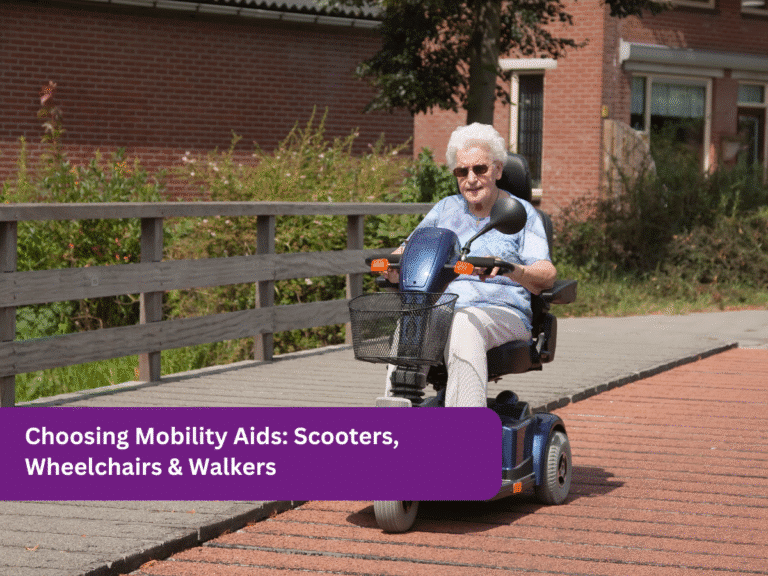
Mobility scooters are popular choices for individuals who need help navigating longer distances outdoors while maintaining independence and comfort. Many users find scooters more intuitive and less physically demanding than wheelchairs or rollators. They are also known as cost-effective alternatives to electric wheelchairs.
A mobility scooter is ideal when the user can sit upright for extended periods, has good hand strength for steering control and wants independence for outdoor travel. It’s also wise to opt for a mobility scooter when the user has difficulty walking long distances and is no longer comfortable using a walker or rollator outdoors.
Mobility scooters are designed for community access. They help individuals participate in daily activities such as visiting friends and family, shopping, attending appointments, exploring neighbourhoods and engaging in social activities. We represent numerous manufacturers of high quality mobility scooters including Pride Mobility, Invacare and Golden Technologies.
Scooters vs. wheelchairs vs. rollators: How do you choose the right mobility aid?
When selecting mobility equipment, consider the user’s physical ability, lifestyle needs and safety requirements. The following is a breakdown to help guide your decision.
We would suggest that you choose a rollator if its user can walk but needs extra stability, enjoys outdoor walks but needs a place to rest and/or require a balance support tool with braking control. Rollators are also recommended for individuals who do no not need full seating or long-distance support.
You should choose a wheelchair for users that cannot walk safely. They’re also ideal for people who get tired very quickly, require full seating support and/or have balance problems that make walking unsafe. A wheelchair should also used by those who need mobility assistance both indoors and outdoors, especially if they rely heavily on seated mobility.
It’s wise to go with a mobility scooter if the user has good upper-body control and hand coordination. If he or she can get on and off the device safely, want independence outdoors for long distances and does not require a device for narrow indoor spaces, a mobility scooter is the right choice.
Frequently Asked Questions (FAQs).
What is the main difference between a walker and a rollator?
A walker must be lifted or slid during use and provides maximum stability. A rollator has wheels, hand brakes and a seat, offering smoother movement and greater convenience.
How do I decide between a wheelchair and a mobility scooter?
Choose a wheelchair if walking is unsafe or impossible. Choose a scooter if the user can sit upright, operate controls and wants independence for longer outdoor distances.
Can I rent mobility equipment instead of buying it?
Yes. LifeCare Mobility Solutions offers wheelchair rental, walker rental and mobility scooter rental services for temporary needs or trial periods.
Do mobility scooters require strength to operate?
Scooters require basic hand strength and coordination to steer and control speed, but most models are user-friendly after a brief learning session.
Will a mobility aid fit in my home?
Walkers and wheelchairs generally work well indoors, while scooters require more space for turning. Our team can help assess your home’s layout and recommend suitable options.
Are rollators safe for outdoor use?
Yes. Rollators are designed for indoor and outdoor use, especially for those who enjoy walking but need support and a place to rest.
What mobility aid is best for someone with limited endurance?
Wheelchairs or mobility scooters are ideal for individuals who tire quickly, allowing them to remain independent without risking falls or exhaustion.
If you’re exploring mobility aids for yourself or a loved one, LifeCare Mobility Solutions is here to provide guidance, expertise and compassionate support every step of the way. To learn more, please don’t hesitate to call us at 416-267-9800 or email us at info@lifecaremobility.ca. You may also contact us by filling out the form on our Contact page!